
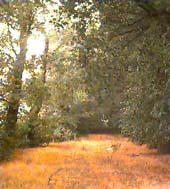
 To
the left, looking north on Main Street from the corner of Curtis,
was a
long double
row of American Elms linking Main and Abel Streets. These were
planted
in the 1870s
by John O'Toole along the driveway to his 20 room Victorian
mansion.
O'Toole grew
produce, hay, and raised thoroughbred race horses here and on
acreage
near Coyote
Creek.
To
the left, looking north on Main Street from the corner of Curtis,
was a
long double
row of American Elms linking Main and Abel Streets. These were
planted
in the 1870s
by John O'Toole along the driveway to his 20 room Victorian
mansion.
O'Toole grew
produce, hay, and raised thoroughbred race horses here and on
acreage
near Coyote
Creek.
The mansion and the 100+ acres of farmland surrounding it were
bought
by James Boyd
in 1883. He did not keep it for long. In 1884, he sold the
property for
the then
grand sum of $24,000 to Santa Clara County for use as an
almshouse.
Newspapers of
the day called it a "palace for the poor," and other such terms to
voice
their indignation over what they saw as a waste of public money.
In spite of initial negative press reaction, it was here the
county's
poor and homeless
could find shelter and work on the farm. A portion of what was
grown
was given to
the poor to sell. Many residents of the almshouse set up stands
along
Oakland-San
Jose Highway (now Main Street) to sell produce and wild mushrooms
to
travelers. In
this way those temporarily down and out could earn their keep and
put
aside a little
to get them back on their feet. Poverty was not viewed as a
permanent
condition in
those days. It was believed and practiced that anyone who was
willing
to work hard
could get ahead.
In the 1940s the county began to house low risk prisoners at the
site.
Over time,
more and more of the ranch buildings were torn down to make way
for
cell block construction.
In 1962, eight elderly men, the last Almshouse residents, were
evicted
and the historic
Victorian mansion was demolished to make room for increasing
numbers of
prisoners
to be housed at the County Jail. The name of the jail became
Elmwood
because of these
stately trees. Today, there remains only one of the buildings from
the
agricultural
days of Elmwood's history left standing. It is called the
"library" and
public access is prohibited.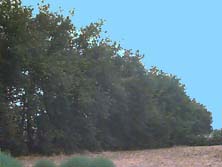
In the late 1970s the Fire Chief, alarmed over a large branch
breaking
off in a wind
storm, ordered all of the trees topped and stripped of their
leaf bearing branches.
The upper third of each tree was removed. Although nearly all of
the
ancient arbor
survived the assault, the cuts were left parallel to the ground.
Rainwater puddling
on this surface then caused rot and allowed insects to invade the
trees.
With new housing developments being constructed to the north and
south
of the O'Toole
Elms, The city council decided that the trees would have to be
destroyed. Although citizens wrote letters and lobbied to
try to preserve at least one of the historic trees, none were
spared.
The last bridge over the old Penitencia Creek bed, a 15 foot wide
one lane culvert, was located at the
east end of the
trees just a few feet from Main Street. It had been the entrance
to the driveway of the Alms House and later to the jail. The
date "1910" was embossed on the concrete abutment of the bridge.
The Milpitas fire department installed
training facilities
around and atop the bridge with high cyclone fencing keeping out
the
public. Later, the bridge was quietly destroyed. No one can
now experience sitting on the concrete
abutments like the
poor of a past century did while selling their vegetables.